

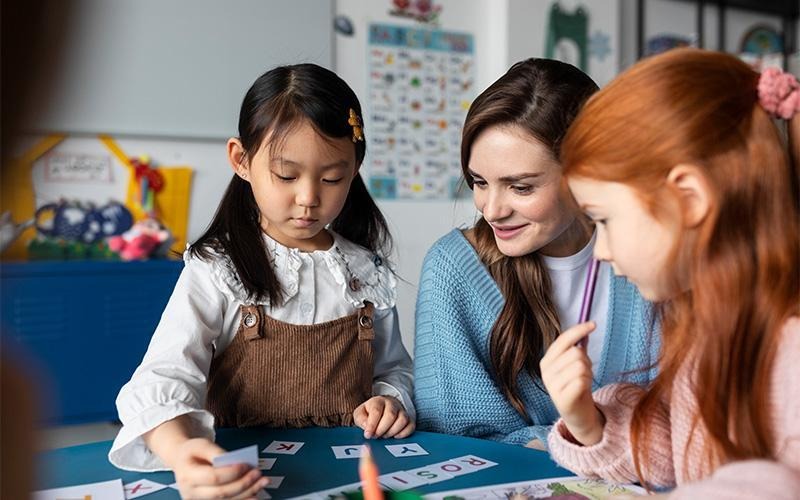
Understanding emotional intelligence (EI) is no longer optional in the field of early childhood education. As research consistently highlights the impact of emotional skills on academic and social success, modern educational programmes now embed EI development as a key component. The importance of emotional intelligence to the curriculum in general and its long-term advantages for young students must be understood by those studying early childhood education courses.
The Role of Emotional Intelligence in Early Childhood Education
Emotional intelligence refers to the ability to recognise, understand, and manage one’s own emotions while also being able to empathise and interact effectively with others. EI is fundamental in early childhood education as it influences behaviour regulation, social relationships, and learning capacity. Children with high emotional intelligence are better equipped to handle classroom routines, cooperate with peers, and tackle challenges with resilience. Therefore, anyone exploring information regarding early childhood education courses will find that emotional development is placed on equal footing with cognitive and physical milestones.
Teaching children to name emotions, develop empathy, and regulate their emotional responses is now a standard objective. Early childhood educators are trained to model emotional awareness and foster a safe environment where feelings are validated and discussed openly. This practice prevents behavioural issues and sets a foundation for lifelong mental health and positive social interactions.
How Early Childhood Education Courses Train Future Educators in Emotional Intelligence
When learning about early childhood education courses, prospective educators will notice that emotional intelligence is not treated as a soft skill but rather as a measurable competency. Courses include dedicated modules on child psychology, communication strategies, conflict resolution, and emotional literacy. Students are trained to observe emotional cues, implement social-emotional learning (SEL) activities, and intervene appropriately when children struggle with emotional regulation.
Practical training components also heavily emphasise applying emotional intelligence in real-world classroom settings. Trainees are taught how to create emotionally supportive environments, deliver emotional coaching, and scaffold children’s understanding of complex emotions. Role-playing exercises, case study analyses, and reflective practices are often incorporated to ensure educators can internalise and apply EI principles effectively. In short, early childhood instruction programmes today prioritise equipping teachers with emotional competence as much as technical teaching skills.
ALSO READ: Effective Early Childhood Teaching Strategies for Preschool Teachers
The Impact of Focusing on Emotional Intelligence in Early Learning Settings
Focusing on emotional intelligence in early childhood education has measurable outcomes. Classrooms where emotional development is prioritised report lower incidences of bullying, better conflict resolution among peers, and improved attention spans. Children who are emotionally literate demonstrate stronger academic performance since they can manage frustration, work collaboratively, and persist through challenges.
Moreover, when educators themselves are emotionally intelligent, they build stronger bonds with children and parents, creating a trust-based ecosystem that enhances learning. Understanding emotional needs allows teachers to individualise support, which is particularly necessary for children with diverse learning or behavioural profiles. Students in early childhood education courses are taught to view emotional intelligence not as a supplementary element but as an integral part of holistic child development.
Why Emotional Intelligence Training Will Remain a Core Focus
The importance of emotional intelligence is unlikely to diminish in future early childhood education courses. Global conversations around mental health, inclusion, and diversity underscore the need for emotionally attuned educators. Graduates who complete early childhood education programmes with strong foundations in emotional intelligence are better prepared to adapt to evolving educational landscapes, address societal changes, and meet children’s multifaceted needs.
Educational institutions designing programmes concerning early childhood education increasingly align their syllabi with frameworks such as CASEL’s five competencies: self-awareness, self-management, social awareness, relationship skills, and responsible decision-making. By doing so, they ensure that the next generation of educators can proactively nurture environments that produce academically capable children and emotionally resilient individuals.
Conclusion
Emotional intelligence is a core focus in early childhood education courses since it underpins children’s success within and beyond the classroom. Understanding the focus on emotional intelligence (EI) is essential for anyone studying early childhood education courses. EI influences how educators interact with pupils, run their classrooms, and support long-term, constructive developmental results. The need for emotionally intelligent teachers who can raise generations of students who are not just smarter but also nicer and more self-aware will only grow in the future of education.
Visit Asian International College to start your journey towards becoming a highly skilled and emotionally intelligent educator.
